Die wichtigsten Erkenntnisse
- Historische Verkaufsdaten zeigen, wo Sie bereits verkaufen, aber sie verraten nicht, wo ungedeckte Nachfrage besteht oder wo Ihre nächste Listung am besten performen könnte.
- Nachfragesignale lassen sich in drei Kategorien einteilen: direkte Kaufsignale (Bestellungen, Store-Locator-Suchen), Engagement-Signale (E-Mail, Web-Traffic) und Marktkontext-Signale (Demografie, Wettbewerb, Kundenfrequenz).
- Retail Opportunity Mapping kombiniert diese Signale zu einer geordneten, geografischen Ansicht des Expansionspotenzials -- geliefert in weniger als 14 Tagen.
- Die Integration von Nachfragesignalen in die Jahresplanung, Quartalsreviews und Händlerverhandlungen schafft einen wiederholbaren Wachstumsprozess statt einer einmaligen Übung.
- Fünf KPIs, darunter Sell-through-Rate, Online-to-Offline-Conversion und Akquisitionskosten nach Region, schließen den Kreislauf zwischen Planung und Performance.
Bei der Planung der Retail-Expansion für nächstes Jahr verlassen sich die meisten Teams bereits auf zahlreiche Daten: Verkaufszahlen, Händlerberichte, Kampagnenergebnisse und natürlich jahrelange Erfahrung vor Ort.
Doch wie es einer unserer Kunden kürzlich formulierte: Manchmal fühlt es sich trotzdem an wie ein Blick in die Kristallkugel.
Denn während diese Erkenntnisse zeigen, wo Verkäufe stattfinden, offenbaren sie selten, wo die Nachfrage noch nicht gedeckt ist. Und genau in diesen Zonen ungedeckter Nachfrage -- den Regionen, in denen Kunden suchen, klicken und interagieren, aber Ihr Produkt nicht im Regal finden können -- liegen die wertvollsten Wachstumschancen.
Genau hier setzt Retail Opportunity Mapping an. Es schliesst die Lücke zwischen dem, was Ihre historischen Daten verraten, und dem, wofür der Markt tatsächlich bereit ist.
Warum selbst starke Teams große Chancen verpassen
Auch datenaffine Konsumgütermarken stoßen immer wieder auf dieselbe Herausforderung: Ihre Datensätze beschreiben die Vergangenheit, nicht das Potenzial.
Verkaufsberichte sagen Ihnen, wo Ihre Listungen performen. Händlerdaten zeigen, wo Sie bereits im Regal stehen. Kampagnenmetriken verraten, wo Ihre Anzeigen Klicks erzielen. Aber nichts davon sagt Ihnen, wo Ihre Kategorie unterversorgt ist oder wo Ihre nächste Listung gut laufen könnte.
Das Problem ist nicht ein Mangel an Daten. Es fehlt die richtige Datenperspektive -- eine, die nach vorne statt zurück blickt und Signale kanalübergreifend verbindet, statt sie isoliert zu betrachten.
Trotz solider Erkenntnisse kämpfen Teams deshalb oft damit:
- Einen stärkeren Case für neue Listungen mit händlertauglichem Nachfragenachweis aufzubauen
- Regionale Aktivierungen und Trade-Budgets dort zu priorisieren, wo die Nachfrage am höchsten ist
- Unterversorgte Regionen mit hohem Potenzial für künftige Expansion zu identifizieren
- Zwischen Regionen zu unterscheiden, die tatsächlich unterversorgt sind, und solchen, die einfach eine geringere Affinität zu Ihrer Marke haben
Der letzte Punkt ist entscheidend. Nicht jede Region ohne Retail-Abdeckung stellt eine Chance dar. Manche Regionen haben keine Abdeckung, weil die Nachfrage dort tatsächlich gering ist. Der Wert von Nachfragedaten liegt darin, beides zu trennen -- Ihnen nicht nur zu sagen, wo Sie abwesend sind, sondern wo Ihre Abwesenheit Sie Umsatz kostet.
Arten von Nachfragesignalen, die zählen
Bevor wir in die Methodik einsteigen, ist es hilfreich, die spezifischen Nachfragesignale zu verstehen, die eine effektive Retail-Wachstumsanalyse antreiben. Nicht alle Daten sind gleich nützlich, und die umsetzbarsten Erkenntnisse entstehen durch die Kombination mehrerer Signaltypen.
Direkte Kaufsignale
Dies sind die stärksten Indikatoren, weil sie tatsächliche Transaktionen oder Kaufabsicht repräsentieren:
- E-Commerce-Bestelldaten. Die geografische Verteilung Ihrer Online-Bestellungen, aufgeschlüsselt nach Postleitzahl, offenbart, wo Kunden Ihr Produkt bereits kaufen. Hohe Bestelldichte in einer Region mit geringer Retail-Abdeckung ist ein klares Expansionssignal.
- Store-Locator-Suchen. Wenn Kunden auf Ihrem Store Locator nach Ihrem Produkt suchen, drücken sie unmittelbare Kaufabsicht aus. Regionen mit hohem Suchvolumen, aber wenigen Ergebnissen signalisieren ungedeckte Nachfrage in Echtzeit.
- Abo- und Wiederkaufmuster. Kunden, die regelmäßig nachbestellen, repräsentieren zuverlässige Nachfrage, die ein nahegelegener Retail-Standort bequemer bedienen könnte.
Engagement-Signale
Diese zeigen Interesse und Bekanntheit an, die oft dem Kauf vorausgehen:
- E-Mail- und SMS-Engagement. Öffnungsraten, Klickraten und Conversion-Raten nach Region aus Plattformen wie Klaviyo zeigen, wo Ihre engagierteste Zielgruppe lebt.
- Website-Traffic und Social-Media-Interaktion. Produktseitenaufrufe, Verweildauer-Metriken und geografische Muster im Social-Media-Engagement zeigen, wo Interesse konzentriert ist, aber sich noch nicht in Retail-Verfügbarkeit umgesetzt hat.
Marktkontext-Signale
Diese liefern den demografischen und wettbewerblichen Hintergrund:
- Kaufkraftindex. Durchschnittliches Haushaltseinkommen und verfügbare Konsumausgaben helfen einzuschätzen, ob die Bevölkerung einer Region Ihr Preisniveau tragen kann.
- Bevölkerungsdichte und Altersverteilung. Stellen sicher, dass die Region über ausreichend Bevölkerung verfügt, die Ihrer Zielgruppe entspricht.
- Wettbewerbspräsenz. Zu verstehen, wo Wettbewerber verteilt sind -- und wo nicht -- deckt Versorgungslücken auf, die Ihre Marke füllen kann.
- Kundenfrequenz. Aggregierte Passantendaten für Einzelhandelskorridore und Einkaufszentren zeigen die kommerzielle Vitalität eines Gebiets.
Der Wert von Consumer Analytics liegt in der Kombination dieser Signaltypen. Eine Region mag ein hohes E-Commerce-Bestellvolumen, aber geringe Kaufkraft aufweisen, was darauf hindeutet, dass Online-Verkäufe dort eher durch Aktionen als durch organische Nachfrage getrieben werden. Alternativ könnte eine Region moderates Bestellvolumen, aber außergewöhnlich hohe Engagement-Signale und guenstige Demografie zeigen -- ein Hinweis auf starke latente Nachfrage, die durch Retail-Praesenz aktiviert werden könnte.
Was Retail Opportunity Mapping auf den Tisch bringt
Retail Opportunity Mapping von Mapular hilft Omnichannel-Marken, ihr Retail-Wachstum mit Zuversicht zu planen. Statt bei null anzufangen oder ein BI-Team einzustellen, erhalten Marken eine fertige Ansicht davon, wo ungedeckte Nachfrage besteht und wie diese mit ihrer aktuellen Retail-Abdeckung überlappt.
Die Ergebnisse umfassen:
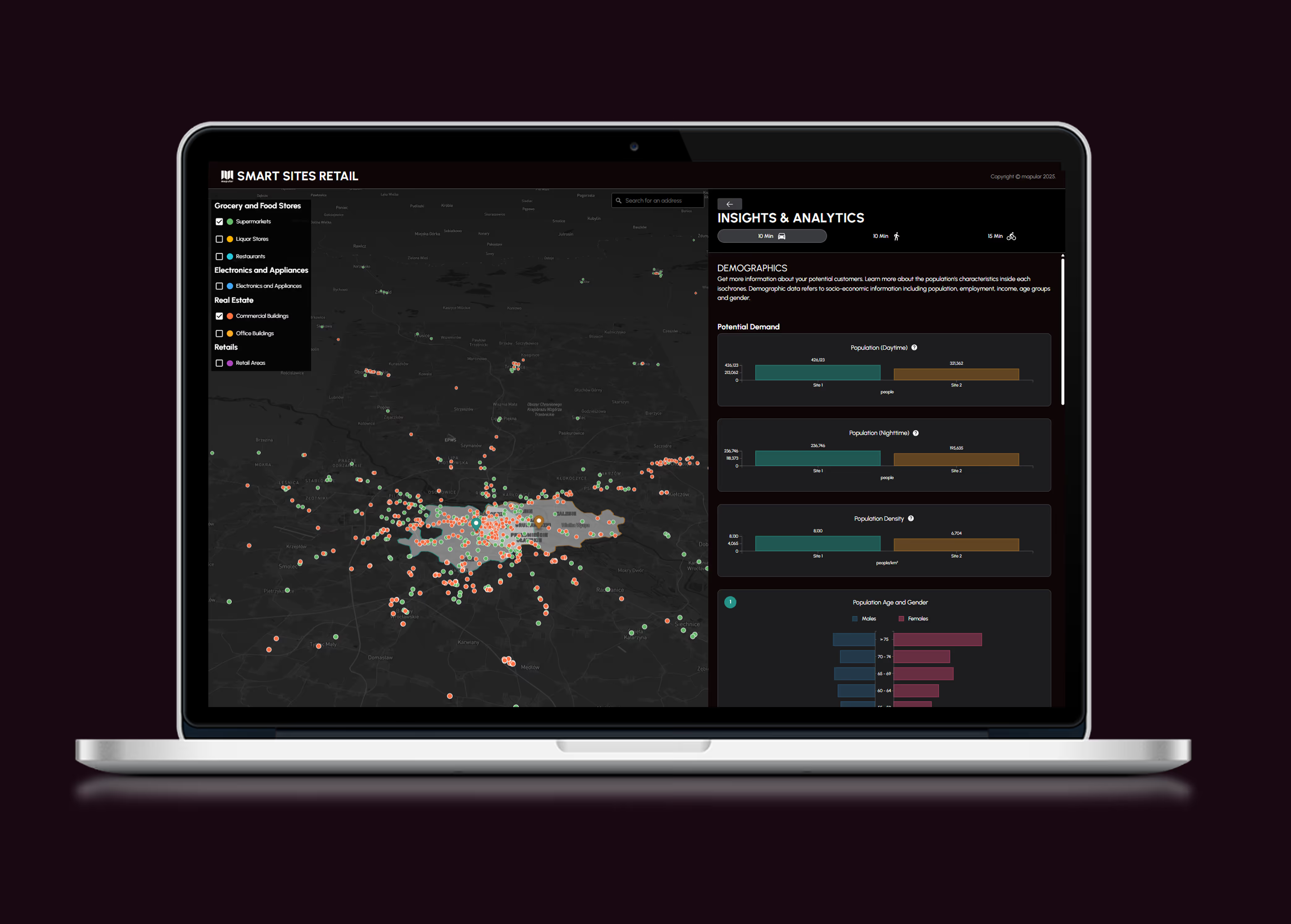
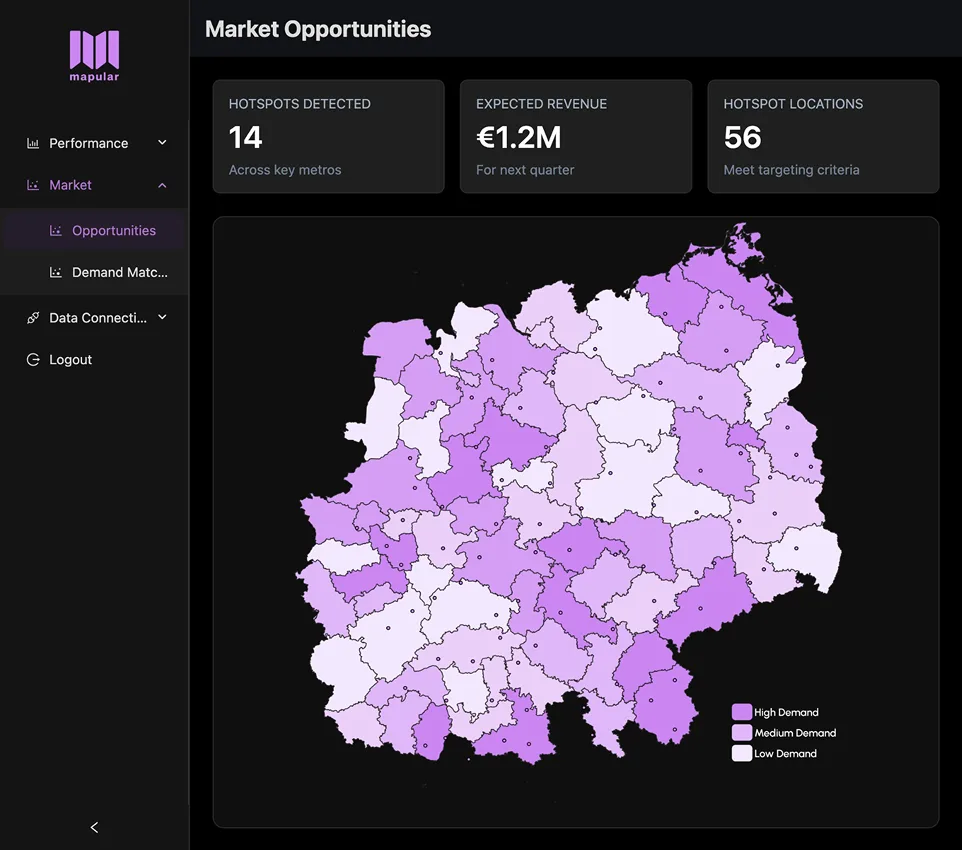
- Eine visuelle Karte, die Regionen mit starkem Verbraucherpotenzial hervorhebt
- Eine geordnete Liste hochattraktiver Gebiete für Listungen oder Aktivierungen
- Händlertaugliche Materialien für Ihre nächste Verhandlung oder Ihren nächsten Rollout
- Ein Nachfrage-Abdeckungs-Verhältnis, das quantifiziert, wie unterversorgt jede Region ist
Schnell. Klar. Ergebnisse in weniger als 14 Tagen, bei Pilotprojekten typischerweise rund 5 Tage.
In drei einfachen Schritten haben Sie Ihre Wachstumskarte
Schritt 1: Verbinden Sie Ihre Daten
Liefern Sie einen schnellen CSV-Export für ein einmaliges Pilotprojekt oder richten Sie eine API-Verbindung für laufende Aktualisierungen ein. Dateninputs umfassen Shopify-Verkäufe, Google Ads, Meta-Kampagnen, Klaviyo-Engagement, demografische Daten und Ihre Händlerlisten. Unsere Pipelines übernehmen die Datenaufnahme und geografische Normalisierung, sodass Ihr Team Exporte direkt aus den Plattformen übergeben kann, die es bereits nutzt.
Schritt 2: Wir führen die Analyse durch
Unser System nimmt Ihre Daten auf, verarbeitet und analysiert sie automatisch. Die Methodik gewichtet jedes Signal nach seiner Relevanz für die Retail-Expansion und legt es dann gegen Drittanbieter-Marktindikatoren, um echte Hochpotenzial-Zonen von Gebieten zu trennen, in denen eine einzelne Metrik stark aussieht, aber das Gesamtbild keine Expansion stützt. Ergebnisse werden in weniger als 14 Tagen geliefert, bei Pilotprojekten typischerweise rund 5 Tage.
Schritt 3: Erhalten Sie Ihre Wachstumskarte
Das Ergebnis ist eine sofort einsetzbare Retail Opportunity Map, die Folgendes umfasst:
- Eine visuelle Überlagerung von Nachfrage versus aktueller Abdeckung auf Postleitzahlebene
- Separate Überlagerungen für Nachfrage und Abdeckung sowie eine kombinierte Nachfrage-Abdeckungs-Verhältniskarte, die sowohl relative Lücken als auch absolute Nachfrage zeigt
- Eine geordnete Opportunitätsliste, die die vielversprechendsten Regionen und Händler für die nächsten Schritte hervorhebt
Format: PDF-Karte für Präsentationen und Stakeholder-Abstimmung, plus eine interaktive Version für tiefere Exploration durch Ihr Planungsteam.
Nachfragedaten in Ihren Planungszyklus integrieren
Die effektivsten Marken behandeln Opportunity Mapping nicht als einmalige Übung. Sie integrieren Nachfragedaten in ihre jährlichen und quartalsbezogenen Planungszyklen. So funktioniert das typischerweise.
Jahresplanung
Zu Beginn jedes Planungszyklus führen Sie eine vollständige Opportunity-Mapping-Analyse durch, um Ihre Baseline zu etablieren. Dies gibt der Führungsebene eine datengestützte Sicht auf die wichtigsten Wachstumsregionen für das kommende Jahr und informiert die Budgetallokation für regionale Aktivierungen, Trade Marketing und Fokusgebiete des Vertriebsteams.
Quartalsreviews
Aktualisieren Sie die Analyse jedes Quartal mit aktuellen E-Commerce- und Kampagnendaten. So kann Ihr Team verfolgen, ob sich Nachfragemuster verschieben, ob neue Regionen aufkommen und ob die im Jahresplan anvisierten Regionen wie erwartet performen.
Händlerverhandlungen
Wenn Sie einen neuen Handelspartner ansprechen oder erweiterte Regalfläche vorschlagen, wird die Opportunity Map zum Überzeugungsinstrument. Statt zu sagen "Wir glauben, dass in dieser Region Nachfrage besteht", können Sie exakt zeigen, wo ungedeckte Nachfrage existiert und welches Umsatzpotenzial sie repräsentiert.
Kampagnenplanung
Marketingteams können die Opportunity Map nutzen, um Regionen für Paid Media, Influencer-Partnerschaften und Sampling-Programme zu priorisieren -- und Budgets dort zu konzentrieren, wo hohe Nachfrage und geringe Abdeckung die größte Conversion-Chance schaffen. Für einen tieferen Einblick, wie Retail Analytics Standortentscheidungen informiert, lesen Sie unseren dedizierten Beitrag zum Thema.
KPIs nach der Umsetzung von Opportunity-Erkenntnissen
Nachdem Sie Opportunity Mapping zur Steuerung von Expansionsentscheidungen genutzt haben, verfolgen Sie diese Metriken, um zu messen, ob die Analyse zu Ergebnissen geführt hat:
- Neue Listungen in Zielregionen. Verfolgen Sie die Anzahl neu eröffneter Retail-Standorte oder unterzeichneter Partnervereinbarungen in den am höchsten bewerteten Opportunitätsregionen.
- Sell-through-Rate nach Region. Beobachten Sie, wie schnell das Produkt nach der Listung aus dem Regal geht. Hohe Sell-through-Raten validieren das Nachfragesignal; langsame Sell-through-Raten können darauf hindeuten, dass die Region zusätzliche Marketingunterstützung benötigt.
- Online-to-Offline-Conversion. Vergleichen Sie das E-Commerce-Bestellvolumen in einer Region vor und nach der Retail-Verfügbarkeit. Ein Rückgang der Online-Bestellungen gepaart mit starken Retail-Verkäufen deutet auf eine erfolgreiche Kanalmigration hin.
- Kundenakquisitionskosten nach Region. Die Expansion in Regionen mit hoher Nachfrage sollte die Akquisitionskosten im Vergleich zum Eintritt in Märkte senken, in denen Sie Bekanntheit erst aufbauen müssen.
- Händler-Zufriedenheitswerte. Partner, die starke Sell-through-Raten sehen, werden offener für eine Ausweitung der Zusammenarbeit sein -- ein positiver Rückkopplungseffekt für künftiges Wachstum.
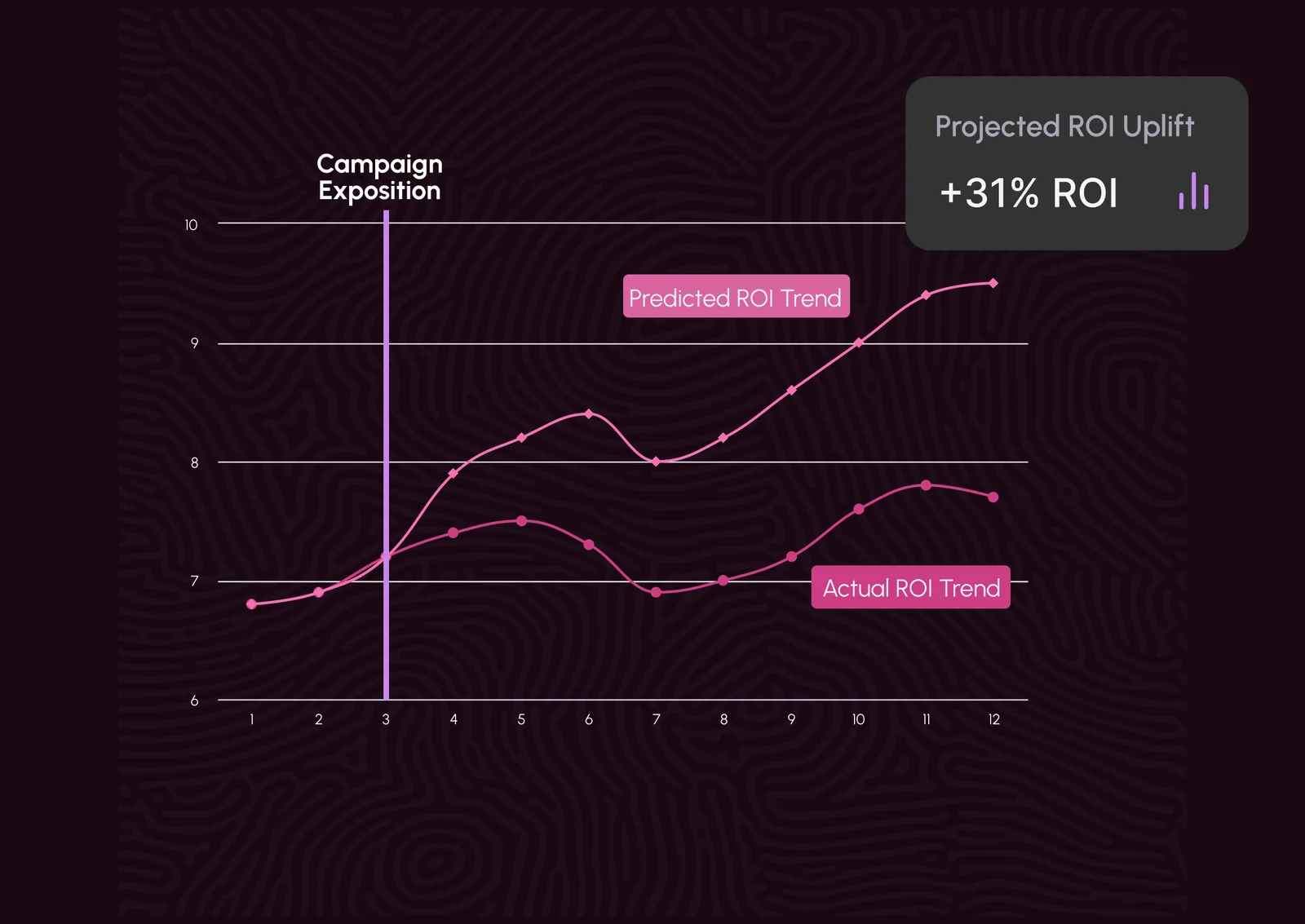
Diese KPIs schließen den Kreislauf zwischen Planung und Performance und machen Opportunity Mapping zu einem messbaren, wiederholbaren Prozess.
Daten in Retail-Entscheidungen verwandeln
Die eigentliche Stärke dieses Ansatzes liegt in den Entscheidungen, die er ermöglicht.
- Trade-Marketing-Teams nutzen ihn, um Aktivierungen in Regionen zu planen, in denen Interesse bereits besteht, aber Listungen dünn gesät sind -- und maximieren so den Return jedes Aktivierungsbudgets.
- Vertriebsleiter nutzen ihn, um Gespräche mit Händlern zu eröffnen, die Nachfragebelege sehen möchten, bevor sie sich auf neue Regalfläche festlegen. Eine Nachfragekarte auf Postleitzahlebene ist überzeugender als eine nationale Verkaufszahl.
- Gründer und CMOs nutzen ihn, um Wachstumsmärkte zu priorisieren und Expansionspläne mit belastbaren Daten zu rechtfertigen. Vorstandspräsentationen und Investoren-Updates werden glaubwürdiger, wenn sie durch geografische Nachfrageanalysen untermauert sind.
Es geht nicht darum, bestehende Daten zu ersetzen. Es geht darum, das Bild zu vervollständigen und jedem Team eine gemeinsame, geografische Perspektive zu geben, durch die Wachstumsoptionen bewertet werden können. Für einen detaillierteren Blick darauf, wie diese Methodik in der Praxis funktioniert, lesen Sie unseren Beitrag darüber, wie Retail Opportunity Mapping verstreute Daten in klare Wachstumsregionen verwandelt.
Von "Wir glauben" zu "Wir wissen"
Die Planung von Retail-Wachstum wird nie völlig frei von Unsicherheit sein, aber sie muss sich nicht anfuehlen wie ein Blick in die Kristallkugel. Wenn Sie sehen können, wo die Nachfrage steigt und wo Sie noch nicht praesent sind, wird jede Entscheidung schneller, klarer und leichter zu verteidigen. Wenn die gesamte Organisation mit derselben geografischen Intelligenz arbeitet, bewegen sich Entscheidungen schneller, weil es weniger zu debattieren gibt. Marketing, Vertrieb und Führung finden zu denselben Prioritäten, weil sie auf dieselbe Karte blicken.
Fazit
Die Daten, die Sie brauchen, um das Retail-Wachstum für nächstes Jahr zu planen, existieren bereits in Ihrer E-Commerce-Plattform, Ihren Werbekonten und Ihrem CRM. Die Herausforderung besteht nicht darin, mehr Daten zu sammeln. Es geht darum, die vorhandenen Daten zu einer geografischen Ansicht zu verbinden, die offenbart, wo Nachfrage ungedeckt ist und wo die Expansion den stärksten Return liefert.
Retail Opportunity Mapping bietet genau diese Ansicht. Es ist schnell, basiert auf Ihren eigenen Daten und liefert Ergebnisse, auf die Ihr Team innerhalb Ihres Planungszeitraums handeln kann. Ob Sie sich auf Jahresbudgetgespräche vorbereiten, einen Case für eine neue Händlerpartnerschaft aufbauen oder entscheiden, wo Sie Ihre nächste regionale Aktivierung fokussieren -- Nachfragedaten geben Ihnen die Evidenz, um mit Zuversicht voranzugehen.