The Challenge
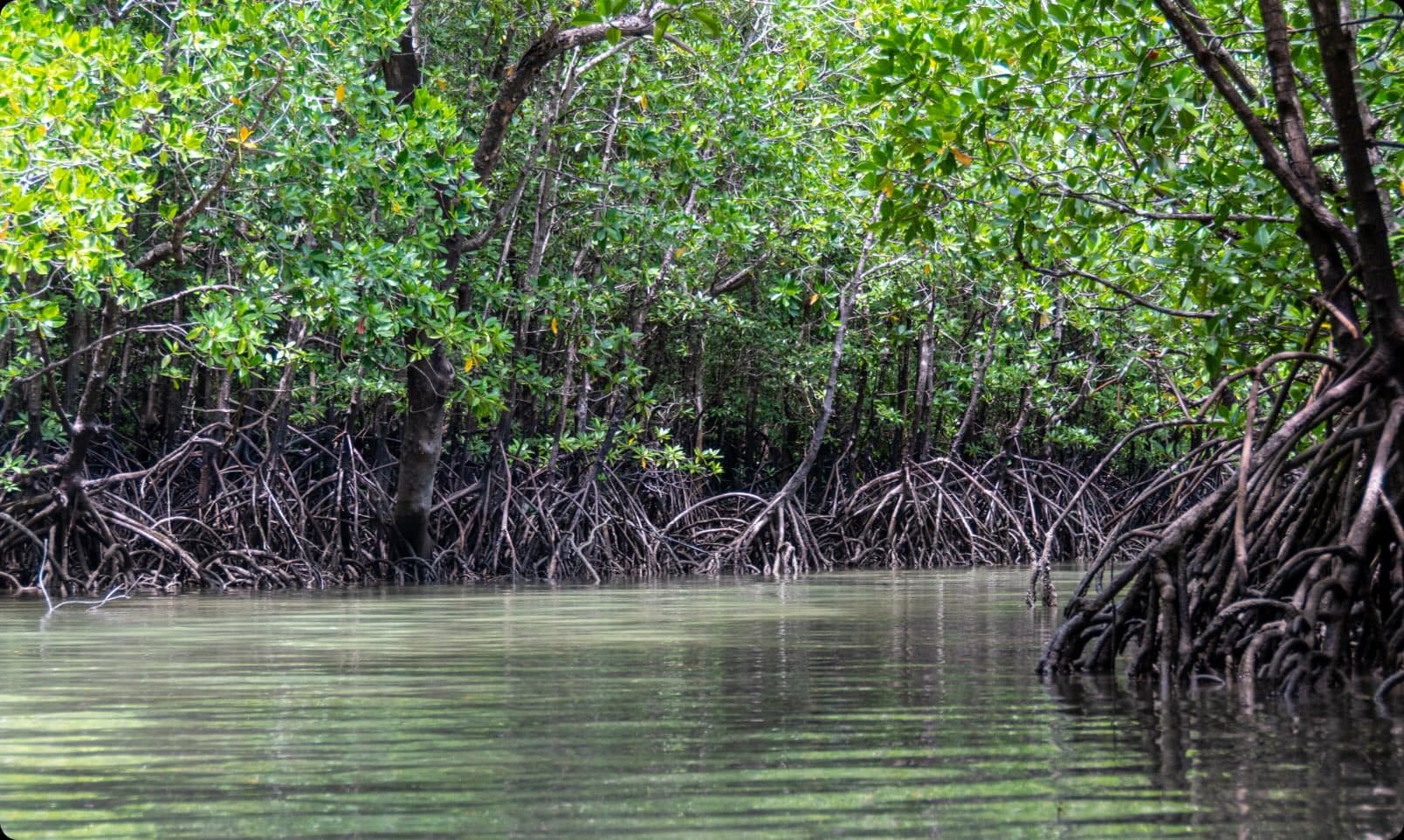
The voluntary carbon market runs on trust. A company paying to offset its emissions needs confidence that each credit represents real, measurable carbon that has actually been captured. That confidence is hardest to establish for blue carbon: the carbon stored by coastal ecosystems such as mangroves, seagrasses, and salt marshes. These are among the most effective carbon sinks on the planet, but they are remote, difficult to survey on the ground, and constantly changing.
TransparenC set out to build a marketplace for carbon credits, starting with blue carbon. A marketplace, though, is only as credible as the monitoring behind it. TransparenC needed a way to visualise project areas, quantify the carbon impact of each one from objective satellite data, and let companies browse and buy credits with the evidence in view. They came to Mapular to design and build it.
Starting Focused
We began deliberately narrow. Working in a close co-development loop, we built a first version around a single project type, mangroves, so the marketplace could go live quickly and prove the model before broadening.
That first version paired two things: an interactive web application where a company exploring offsets could see project areas on a map, inspect their key carbon metrics, and buy credits, and a satellite-analysis pipeline behind it that turned Earth observation data into those metrics. It was live and usable within weeks, enough to validate the concept with real users.
Growing into a Multipurpose Carbon Platform
From that focused start, the marketplace grew into a full production platform, and crucially one that is not tied to any single ecosystem or credit type.
On the product side, it gained proper user accounts with purchase history and a personal view of the credits each customer holds, a fuller marketplace and checkout, single sign-on, and a flexible project database, so a new carbon project can be onboarded without a rebuild. Blue carbon was the starting point; the platform went on to handle forest-carbon (REDD+) projects as well, and is built to take on other project types as they come.
On the monitoring side, the verification got deeper. The analytics pipeline assesses each project by its area of interest and estimates above-ground biomass over time using satellite change detection, combining optical vegetation indices (NDVI) with radar-based measures (SAR). Moving from a static snapshot to change over time is what lets the platform show that carbon is actually accumulating, which is the crux of a credible credit.
Results & Impact
- A multipurpose carbon platform. What began as a single mangrove marketplace became a system that handles carbon projects of different types, blue carbon, forest carbon, and beyond, on one foundation.
- Verification that stands up. Each project's carbon impact is grounded in satellite imagery and biomass change detection rather than self-reported figures, exactly what a credible voluntary carbon market depends on.
- A model proven, then broadened. Launching with one focused project type validated the marketplace with real users before it expanded into a production platform.
Key Takeaways
- Start focused, then broaden. Launching with a single project type proved the model quickly and set up a platform that could expand to any carbon project, rather than betting everything on scope up front.
- In carbon markets, the monitoring is the product. A marketplace interface is table stakes; the defensible asset is the satellite change detection that proves each credit represents real, growing carbon.
- Build the first version to grow. Because it was designed to extend, the marketplace could add accounts, checkout, new project types, and deeper analytics without starting over.